If you only look at the front elevation, you miss the point of Cherry Hills Village. In this part of Arapahoe County, architecture is shaped as much by land, setbacks, trees, and privacy as by brick, stone, or glass. If you are buying, selling, or simply trying to understand what gives this market its distinct feel, knowing how each style lives can help you read a property more clearly. Let’s dive in.
Why Cherry Hills Village Feels Different
Cherry Hills Village is a predominantly residential city of about 6,000 people spread across roughly 6.5 square miles. The city’s 2022 Master Plan describes it as a safe, serene, low-density residential community with a historically semi-rural, pastoral, and open character.
That planning vision matters when you tour homes. Large lots, open spaces, trails, trees, and preserved view sheds shape the experience of the neighborhood long before you step inside a house.
Local history and zoning reinforce that pattern. Much of the area was shaped by early lot-size standards tied to wells and horses, and current single-family zoning still requires generous lot areas, wide setbacks, and relatively low building heights. In practical terms, homes here tend to feel like part of a broader site plan, not a tight row of street-facing facades.
The Big Picture on Style
Cherry Hills Village is not defined by one signature look. Instead, it is a style-mixed, landscape-led market where several architectural families show up again and again.
The most recognizable categories are:
- Historic Colonial Revival and Classical Revival estates
- Tudor and English Revival manor-style homes
- Mid-century and later ranch homes, often remodeled
- Contemporary custom builds
- Modern farmhouse renovations and newer homes
What ties them together is not uniform design. It is the way the house, the lot, and the outdoor rooms work as one composition.
Colonial Revival Estates
Historic Colonial Revival and Classical Revival homes represent the formal estate tradition in Cherry Hills Village. A clear example is the Foster-Buell Estate, a 3.5-acre property with a mansion, caretaker house, gazebo, sunken gardens, pergolas, expansive lawns, and a private road approach.
That kind of layout tells you something important about how this style lives. These homes often function more like compounds than standard suburban houses, with arrival sequences, secondary structures, and outdoor spaces that matter almost as much as the main residence.
How Colonial Revival Homes Live
Inside, you can expect a more formal and layered feel than in newer custom homes. The floor plan often unfolds in stages, with an entry, formal rooms, service areas, and distinct transitions out to gardens or terraces.
Outside, the grounds are part of the architecture. Lawns, pergolas, drives, and garden rooms are not decorative extras. They help define privacy, entertaining flow, and the rhythm of daily life on the property.
What Buyers and Sellers Should Notice
If you are touring this style, focus on more than finishes. Pay attention to how the home sits on the lot, how the approach feels, and whether the outdoor spaces still support the estate-like intent of the property.
If you are selling, this is where presentation matters. Buyers in this segment often respond to the full composition, including the drive-up experience, garden structure, and the relationship between the main house and any outbuildings.
Tudor and English Revival Homes
Tudor Revival is one of the most recognizable historic styles in Cherry Hills Village, especially around the country club area. National Register documentation highlights examples from 1920 through 1940, including the Maitland Estate and the Owen Estate.
These homes are known for steep roofs, intersecting gables, decorative half-timbering, grouped casement windows, brick lower walls, and tall chimneys. The overall look is more textured and storybook than the formal symmetry of Colonial Revival estates.
How Tudor Homes Live
Tudor and English Revival homes often feel substantial, room-rich, and layered. Rather than one large open core, you may find a sequence of rooms, wings, and specialized spaces that create separation and character.
That can be a real strength if you value architectural detail and a sense of progression through the house. It can also mean a very different daily experience from newer homes designed around one central great room.
Recent renovation coverage suggests many of these homes are updated in place rather than replaced. In practice, that often means buyers get preserved exterior character with interiors adapted for contemporary living.
What to Look For in a Tudor Tour
When you walk a Tudor home, it helps to know a few terms:
- Half-timbering: decorative wood trim on exterior walls
- Gable: the triangular portion of a wall under a pitched roof
- Casement window: a window that opens like a door on hinges
- Manor house: a large home with a formal, estate-like presence
Those details are not just stylistic labels. They usually signal a home that values form, texture, and architectural identity over minimalism.
Ranch Homes and Transitional Remodels
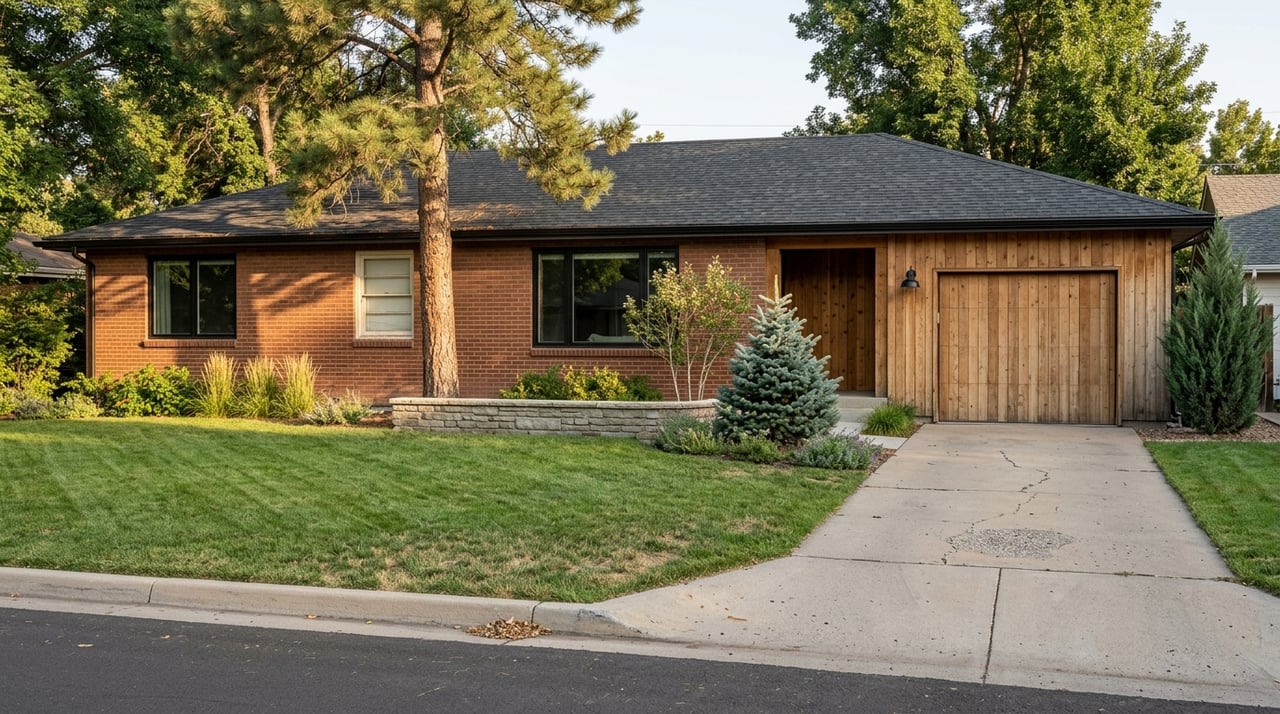
Cherry Hills Village also includes ranch homes from the mid-century and later periods, often on sizable lots. These homes may start as low-slung houses with smaller rooms, lower ceilings, and more compartmentalized layouts, but they can be especially renovation-friendly.
One documented Village ranch remodel opened the floor plan, raised the roof pitch, added dormers for light, and expanded outdoor living with a porch and pergola. That example captures why this category appeals to so many practical buyers.
How Ranch Homes Live
Ranch and transitional homes tend to be the easiest style to translate into everyday life. They usually support one-level or mostly one-level living, more casual circulation, and a central living zone that combines the kitchen, dining area, and family room.
In Cherry Hills Village, the big draw is that you can keep the mature landscape, generous lot, and quiet street presence while updating the interior to feel brighter, more open, and more connected to the outdoors.
Why This Style Appeals to Renovation-Minded Buyers
For buyers who want architectural breathing room without taking on a full historic estate, ranch homes can be a smart fit. They often offer flexibility for additions, terraces, porches, or interior reconfiguration because the site area is generous.
This is also where contractor-backed guidance can add real value. Understanding roofline changes, layout openings, outdoor living additions, and likely scope before you close can help you make a clearer decision about what is possible.
Contemporary Custom Homes
Newer contemporary homes in Cherry Hills Village often center on clean lines, natural materials, and a strong connection to outdoor space. Recent examples have featured one-level main living areas, U-shaped plans, courtyards, big windows, floor-to-ceiling glass, and sliding walls that merge interior rooms with patios and water features.
These homes often turn away from the street and open toward private courtyards, terraces, lawns, or gathering spaces. That inward focus works well in Cherry Hills Village because large lots and setbacks allow privacy without sacrificing light.
How Contemporary Homes Live
Contemporary custom homes are often designed from the inside out. Instead of many separate rooms and long hallways, they usually prioritize large open living zones, minimal circulation space, and a strong kitchen-great-room core.
The lifestyle effect is immediate. You get more daylight, easier entertaining flow, and a stronger sense that the patio, courtyard, or lawn is part of the house rather than a separate backyard.
Key Features to Watch For
When touring a contemporary home, these terms can help you read the design:
- Courtyard: a private outdoor space framed by the house
- Terrace: a hardscaped outdoor living area
- Great room: a large shared living space, often combining multiple functions
- Sliding glass wall: large movable glass panels that open to the outdoors
- Pergola: an outdoor structure that creates partial shade and defines a seating area
In this category, those elements are usually central to the floor plan. They are not just amenities tacked on at the end.
Modern Farmhouse in the Village
Modern farmhouse homes and remodels also appear in Cherry Hills Village, especially in properties designed to connect closely to larger sites. Recent examples describe terraces, fountains, plantings, and broad indoor-outdoor transitions that make the landscape part of everyday living.
In this setting, modern farmhouse is less about trend and more about usability. The style often blends approachable forms with open interiors, natural light, and strong visual ties to acreage, lawn, and garden spaces.
How Modern Farmhouse Homes Live
These homes usually feel less formal than revival estates and less stark than some ultra-modern builds. You may see open gathering spaces, broad views to the outdoors, and outdoor rooms that support everyday use as well as entertaining.
For many buyers, that creates a middle ground. You get warmth, openness, and site connection without giving up architectural presence.
How to Read a Home Beyond Style
In Cherry Hills Village, style matters, but site planning matters just as much. Two homes can share a label and live very differently depending on how they handle privacy, light, outdoor access, and the relationship between the house and the land.
As you tour, it helps to ask simple questions:
- Does the home open to the best parts of the lot?
- Is the outdoor space integrated into daily living or separated from it?
- Does the layout feel formal, casual, or adaptable?
- How much of the home’s value comes from architecture versus site design?
- If updates are needed, is the structure well-suited for renovation?
Those questions are especially useful in a market where homes often sit on large parcels and architectural value is tied to both design and setting.
Why This Matters for Buyers and Sellers
For buyers, understanding how a home lives helps you avoid judging a property only by photos or style labels. A Tudor may offer far more usable privacy and character than you expected. A ranch may hold more renovation upside than a finished new build. A contemporary house may feel dramatically different in person because of light and courtyard orientation.
For sellers, this same lens can sharpen how you position the property. In Cherry Hills Village, effective marketing often means showing not just the architecture, but the site strategy, outdoor rooms, privacy, and flow that make the house work.
That is one reason technical perspective matters in this market. When a home has remodeling potential, complex grounds, or architectural features that need to be interpreted clearly, practical guidance can help buyers and sellers understand value more accurately.
If you want help evaluating a Cherry Hills Village home through both a market and construction lens, Jeff Piquette offers contractor-backed real estate guidance for buyers, sellers, and renovation-minded clients.
FAQs
What architectural styles are common in Cherry Hills Village?
- Common styles in Cherry Hills Village include Colonial Revival, Classical Revival, Tudor Revival, English Revival, ranch homes, contemporary custom homes, and modern farmhouse properties.
How do Tudor homes in Cherry Hills Village usually live?
- Tudor homes in Cherry Hills Village often feel layered and room-rich, with more separation between spaces, strong exterior character, and updated interiors in many renovated properties.
Are ranch homes in Cherry Hills Village good for remodeling?
- Ranch homes in Cherry Hills Village are often well-suited for remodeling because they typically sit on generous lots and can support opened layouts, additions, porches, terraces, and more indoor-outdoor connection.
Why do contemporary homes fit Cherry Hills Village so well?
- Contemporary homes fit Cherry Hills Village well because the city’s large lots, wide setbacks, and low-density pattern support privacy, daylight, courtyards, and strong indoor-outdoor living.
What should buyers focus on when touring Cherry Hills Village homes?
- Buyers should look at more than style and finishes, including how the home sits on the lot, how it handles privacy and light, how outdoor spaces connect to the interior, and whether the layout matches their daily living needs.